

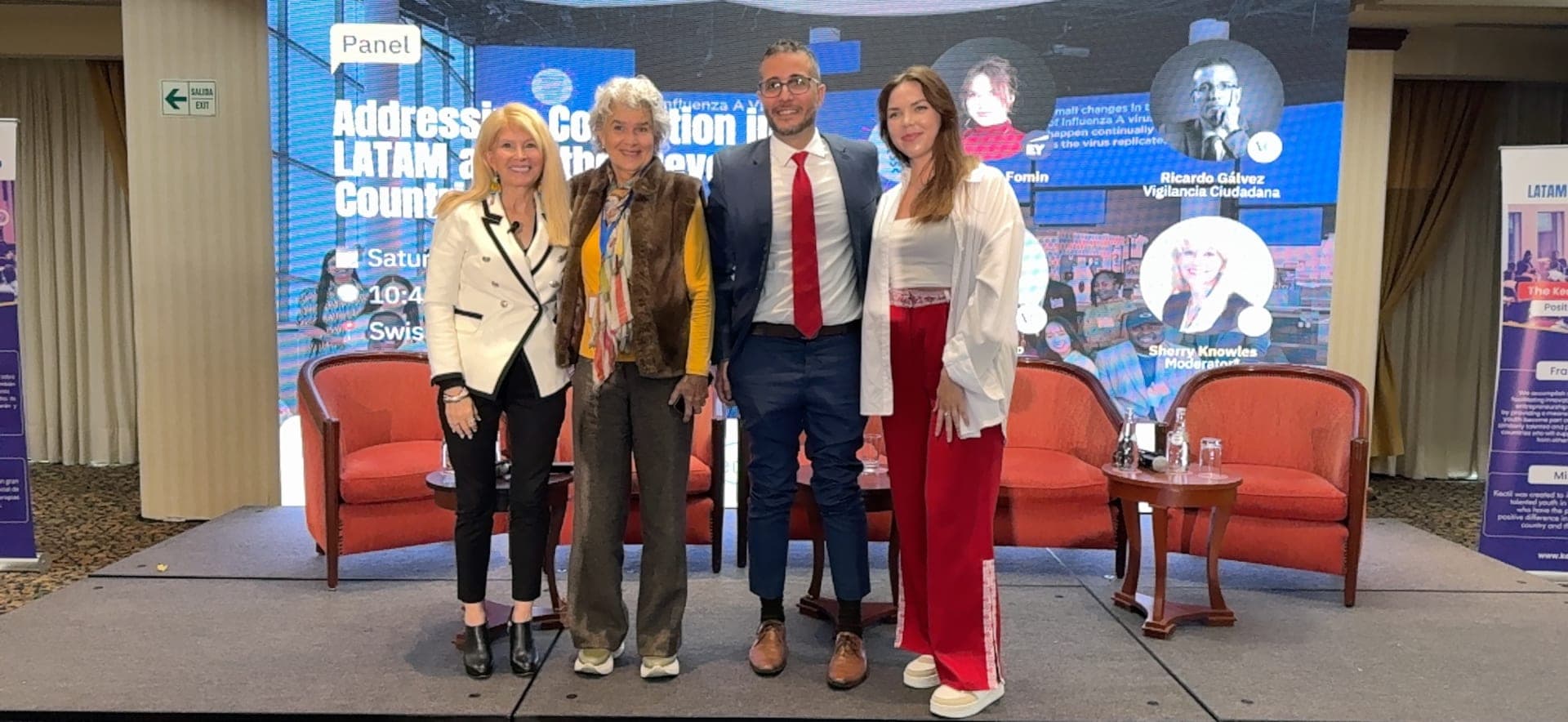
The idea for this conference did not begin with logistics, venues, or speakers. It began with a question that stayed with me for months: What would happen if young people across Latin America were given a space that was truly theirs, one where their voices were not symbolic, but taken seriously? When the Spanish-language Kectil Program officially launched in 2025, reaching more than 600 young people across the region, it became clear to me that a virtual connection was not enough. There was a growing need for a physical space, one where ideas could collide, relationships could deepen, and collective leadership could take shape. That realization marked the beginning of what would later become the first Kectil Program Conference in Latin America. From January onward, I committed myself fully to turning that vision into reality. The goal was never to create a conventional conference. I wanted to design an experience, one that reflected the diversity, creativity, and urgency of Latin American youth. On August 8–9, 2025, that dream materialized in Lima, Peru, at the Swissotel Lima, bringing together more than 200 young leaders. Building a Space Designed for Youth, by Youth Young participants arrived from every region of Peru, joined by peers from Colombia, Ecuador, and Bolivia. From the very beginning, the atmosphere was charged with energy and expectation. Panels, workshops, and collaborative games were intentionally designed to break hierarchies and encourage participation. These were not passive audiences; they were active contributors. Through team dynamics and co-creation sessions, participants worked together to develop concrete proposals addressing public policy, civic engagement, environmental protection, and social justice, many of which were prepared to be presented to the Congress of the Republic of Peru during the 2025–2026 period. Cultural expression was also central to the experience. Traditional dances and spiritual performances honoring Peru’s indigenous heritage reminded us that leadership in our region is inseparable from identity, memory, and community. Conversations That Transformed Into Commitment One of the most meaningful aspects of the conference was the presence of speakers who understood that their role was not to lecture, but to listen, guide, and inspire. Leaders and changemakers such as Angel Montero Cáceres, Nayla Pariamachi Panebra, José Antonio Alva Bacigalupo, Venuca Vivanco, Andrea Falcón, Ana Paula Guillén Yangali, Norly Melchor Valdivia, Inés Yábar, María Fernanda Chaparro Cornejo, Brian Oblitas Gallardo, Daniel Torres Castillo, Ricardo Gálvez del Bosque, Luz María Helguero, and Noemí Huamán Castillo shared not only their expertise, but their personal journeys. What made these moments powerful was the way participants engaged, asking difficult questions, challenging assumptions, and connecting their own realities to broader regional issues. The line between speaker and participant often disappeared, replaced by genuine dialogue. Crossing Borders to Be Heard Perhaps the most moving dimension of this conference was its international participation. Young leaders from Colombia and Bolivia traveled for days to be present, despite the political instability and risks that currently define their contexts. They were welcomed with warmth and solidarity by Peruvian youth, creating a sense of regional unity that felt both rare and necessary. One story, in particular, stayed with me. Valentina, a young participant from Bolivia, traveled nearly 48 hours to reach Lima. She confronted exhaustion, uncertainty, and fear, yet arrived with clarity and determination. Her motivation was simple and powerful: to speak out about the critical situation her country is facing and to be part of a collective that believes youth voices matter. Her courage reflected that of many others who chose participation over silence. Impact Beyond the Event By the end of the conference, it was clear that something meaningful had taken place. What we witnessed was not just enthusiasm, but agency. Young people demonstrated that they are ready to lead, to propose solutions, and to collaborate across borders. They carry an energy that is both urgent and hopeful, a desire for change that needs spaces where it can grow. Organizing this conference reaffirmed something I deeply believe: when we create intentional spaces for youth, we are not simply hosting events, we are cultivating ecosystems where ideas evolve into initiatives and leadership becomes collective. This conference was not the conclusion of a project. It was the beginning of a regional conversation. And to every young person who showed up, raised their voice, and trusted in this shared vision, thank you. This is only the beginning.
Skip to content
We are pleased to announce our website for Kectil Alumni. -> Visit Kectil Alumni Today!
Hi, I'm Kai the Kectil Assistant.