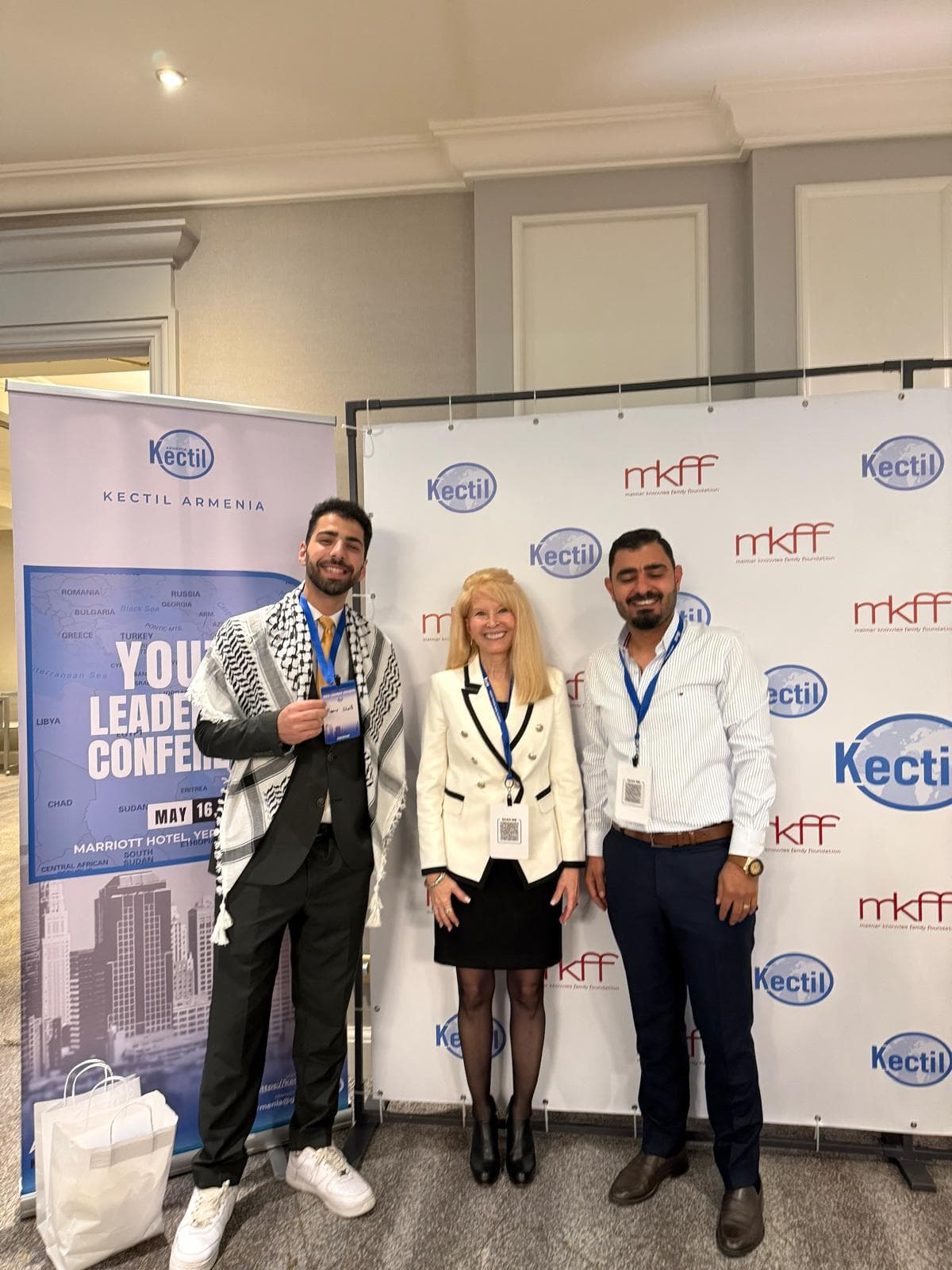
On May 16, Yerevan became a vibrant meeting point for young leaders from across the world with the launch of the Kectil Armenia Youth Leadership Conference 2025. Nearly 100 participants from Armenia, Egypt, Tunisia, Iran, Iraq, Syria, Palestine, Jordan, the UAE, the USA, India, Kazakhstan, and Myanmar gathered to exchange ideas, confront challenges, and reimagine leadership across borders. From the opening ceremony to the final panel, the conference embodied Kectil’s mission: empowering youth to become ethical, engaged, and globally minded leaders.
The opening ceremony set a powerful tone. Goharik Grigoryan, Board Member of the Kectil Program and President of Kectil Armenia, welcomed participants with a vision of youth-led change rooted in dialogue and cooperation. Sherry Knowles, Founder and Executive Director of the global Kectil Program, followed with an inspiring address on nurturing young leaders across cultures. The keynote speech by Sona Ghazaryan, Member of the Armenian Parliament, highlighted Armenia’s unique role as a bridge between cultures and emphasized the importance of dialogue, coexistence, and peace in an increasingly polarized world.
One of the intellectual highlights of the conference was the presentation of the 2025 Kectil Youth Speak Survey, introduced by Sherry Knowles. Conducted in partnership with CMI and LeadCap Knowledge Solutions, the global study collected insights from more than 2,250 young people worldwide on issues such as corruption, leadership, conflict, and environmental challenges. The results sparked deep reflection and dialogue, reinforcing a central message of the conference: youth are not merely future leaders — they are today’s changemakers.
Several panel discussions explored the realities faced by young leaders in fragile and transforming societies. The panel on “Challenges Faced by Young Leaders in Armenia and Middle East Countries,” moderated by Goharik Grigoryan, brought together voices from Armenia, Syria, Palestine, and Egypt. Speakers shared personal experiences of navigating political, cultural, and institutional barriers while trying to lead meaningful change. A central question emerged: how can young leaders support one another across borders? The answer lay in solidarity, shared learning, and platforms such as Kectil that make cooperation possible.
Another powerful conversation examined the “Effect of Corruption on Youth Development.” Moderated by Edvard Grigoryan, panelists from Armenia, Egypt, and India reflected on how corruption restricts access to education, employment, and civic participation. Yet the discussion also highlighted resistance and resilience: youth organizing grassroots movements, demanding transparency, and building networks to challenge entrenched systems. The panel stressed that corruption is not only a national problem but a global one requiring international cooperation.
The conference also connected leadership with peacebuilding. Participants visited the National Assembly of Armenia, where they engaged in dialogue with Member of Parliament Maria Karapetyan about governance, inclusion, and youth participation in political life. The visit underscored the role of institutions in shaping sustainable peace and showed young leaders that their voices belong in formal political spaces.
In a deeply moving online panel on resilience in fragile states, youth leaders from Myanmar, Ethiopia, Papua New Guinea, and the Standing Rock Sioux Native American Tribe shared their lived experiences of conflict, instability, and marginalization. Their testimonies revealed both hardship and hope, emphasizing that global solidarity and supportive networks are essential for youth striving to create change under difficult conditions.
Leadership development was also addressed on a personal level. Sherry Knowles led an interactive session using the Gregorc Mind Styles Model, helping participants identify how they think, collaborate, and lead. Through practical exercises, young leaders learned that self-awareness is the foundation of effective teamwork and inclusive leadership.
Education reform emerged as another major theme. A high-level panel on curriculum reform in Armenia brought together policymakers and education experts who discussed modernizing teaching methods, empowering educators, and incorporating international best practices. Despite limited resources, speakers expressed optimism driven by a new generation of educators and students eager to transform classrooms into spaces of innovation and equity.
The conference also celebrated success stories within the Kectil community. Young leaders from Tunisia, Palestine, Iran, and Kazakhstan shared how Kectil had shaped their personal and professional journeys, turning ambition into action through mentorship, international exposure, and project funding. Their stories demonstrated that leadership is not defined by position but by service, responsibility, and impact.
Another thought-provoking session critically examined the role of global NGOs and intergovernmental organizations. Panelists discussed the gap between promises and practice, urging institutions to move beyond symbolic youth participation toward genuine partnerships based on trust and shared decision-making.
The Law on Youth Policy in Armenia was explored in a panel bringing together government officials, experts, and youth representatives. Discussions focused on translating legal frameworks into lived reality through collaboration between state institutions and youth organizations, drawing inspiration from international models while staying grounded in local needs.
The final panel addressed regional dynamics and Armenian-Azerbaijani relations, highlighting the role of youth, civil society, and international cooperation in building sustainable peace in the South Caucasus. While acknowledging ongoing challenges, speakers emphasized dialogue and regional collaboration as essential paths forward.
The Kectil Armenia Youth Leadership Conference 2025 was more than a series of panels and speeches. It was a living example of youth diplomacy in action — a space where diverse histories, cultures, and perspectives met with a shared commitment to peace, justice, and leadership. Through dialogue, learning, and connection, the conference reaffirmed a powerful truth: when young people are trusted, supported, and united, they become the strongest force for positive change in the world.